Siena Day 2

Took a walk around Siena to locate out starting point for the afternoon tour to Chianti region then headed backwards to the Duomo piazza to go to Santa Maria Della Scalia . It was excellent especially the Pilgrims hall with frescoes of the medical/ hospital work which was done there- very interesting.
There are so many tourists in Siena!
Chianti tour-
This was a delightful guide with faltering but good English. Superb weather for our drive through the Tuscan countryside. First stop – Castellina de Chianti – very pretty town . Walking with a tour group is NOT us – you don’t have time to take it in. We did chat to a nice Perth couple
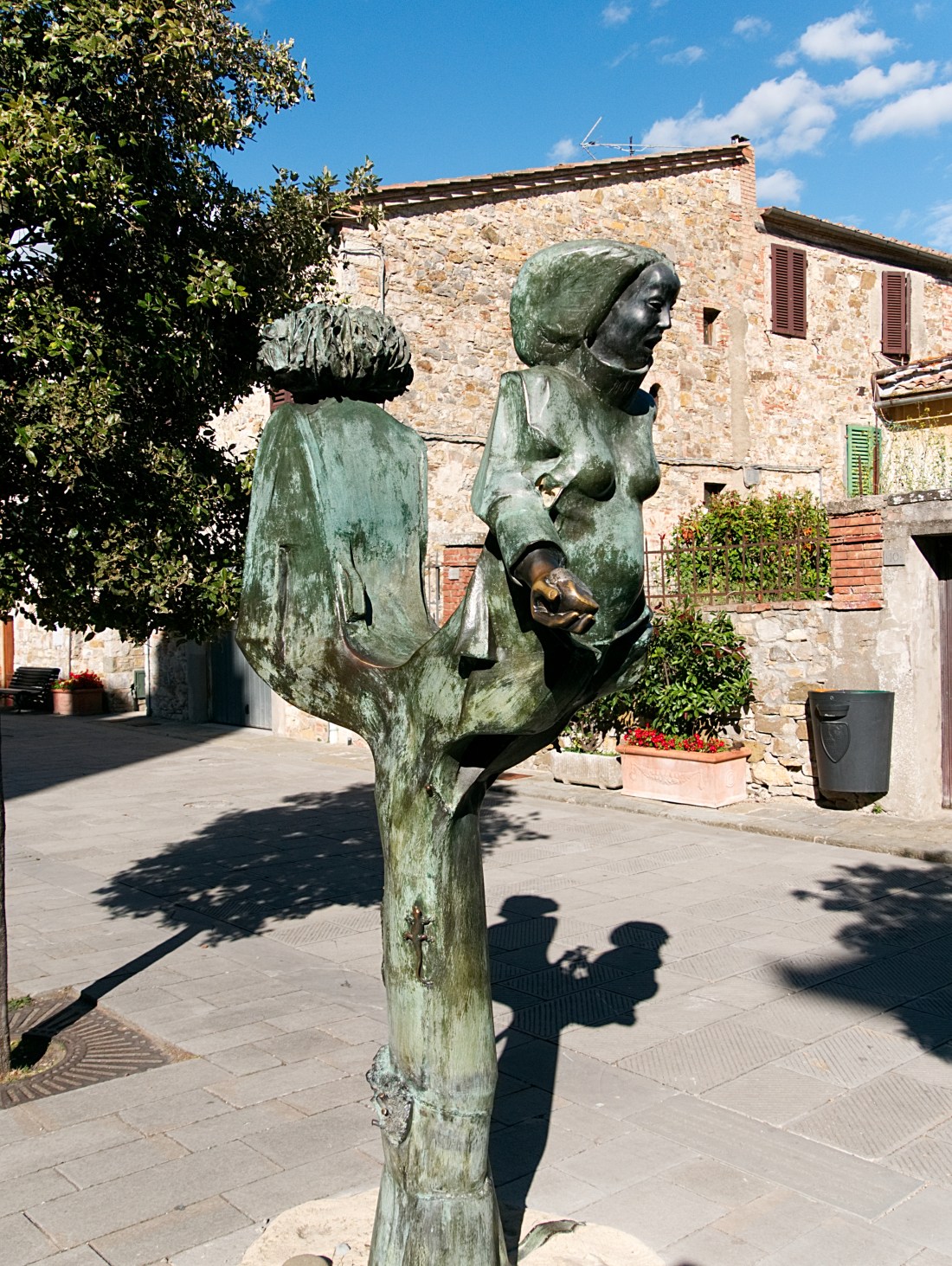
080 Siena 0067
Second stop – San Gimignano – a gorgeous hilltop town but totally packed with tourist even though it was 4.30 in the afternoon- mainly sat and tried the local wine.
Third stop – Cantine  Tuscans Vineyard. The wines were very good – went through from white to big reds and a dessert wine accompanied by bread, biscuits, salami, cheese, special oils olive and truffle and balsamic vinegar- some interesting chat with Americans on our table

Siena Day 1

Another beautiful day weather wise – easy drive to Siena by the expressway seeing some pretty hilltop towns.
The fun started when we tried to park. The free car park we had been told about was full and with no expectation of getting one we reset the gps for the pay car park . It led it is through the narrow streets of the center of the town filled with tourists. We followed another car which didn’t seem to know what it was as doing either- fortunately we went down a street which led to outside the walls. Still ended up receiving a fine for driving through a pedestrian area – thank you Italy for ripping off tourists!!! Following google on the mobile we eventually made it around and through the gate to the car park. We walked with our luggage to our B and B – up and down. Big things were happening in our street and there were preparations for celebration
We weren’t sure what to expect as there was no one at  office. We rang and she eventually came- delightful – very proud of Siena and told us plenty of history and what to expect that night. This area of Siena had won the horse race.
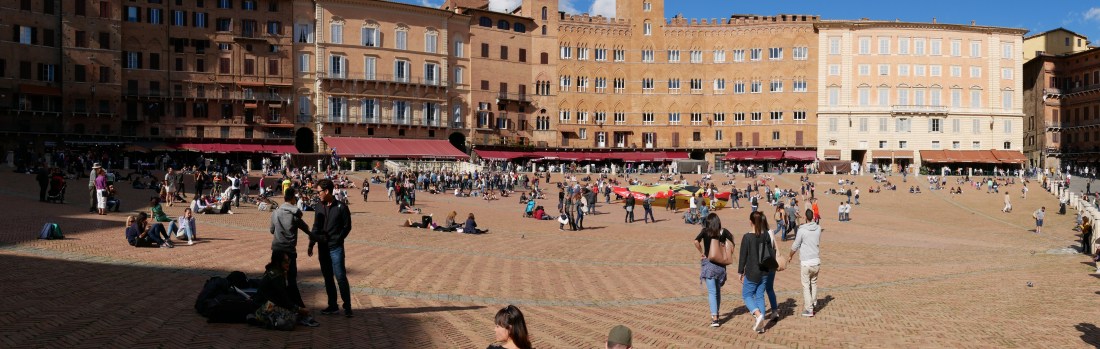
080 Siena 0008
The Palio di Siena (Italian pronunciation: [ˈpaːljo di ˈsjɛːna]; known locally simply as Il Palio) is a horse race that is held twice each year,on 2 Julyand16 August, in Siena, Italy. Ten horses and riders, bareback and dressed in the appropriate colours, represent ten of the seventeen contrade, or city wards. The Palio heldon 2 Julyis named Palio di Provenzano, in honour of the Madonna of Provenzano, a Marian devotion particular to Siena which developed around an icon from the Terzo Camollia. The Palio heldon 16 Augustis named Palio dell’Assunta, in honour of the Assumption of Mary.
Our accommodation is so well located about 100 meters from the Piazza del Campo. The weather was magnificent and we sat on the ground taking it in with many others.
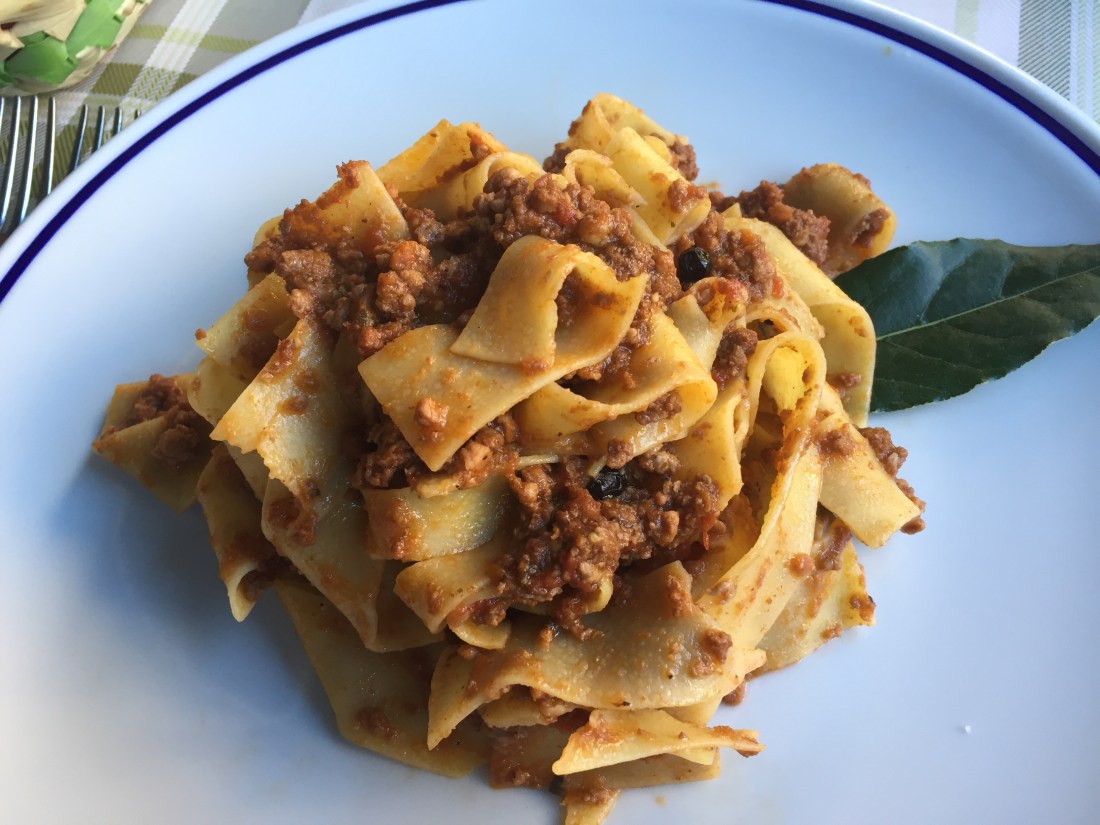
Had lunch at local recommended restaurant – Peter had local dish – pappardelle with wild boar sauce.
IMG_5760
Siena is busy with tourists but totally gorgeous – walked up to the duomo which was brilliant white in the sunshine.
We had a fantastic Saturday night in our street. The street had been set up with different themes from key museums e.g. Louvre,Cairo, British- so there were people dressed up -can can girls, mummies, the pipe and cardinals,opera characters. There was live music at the Moulin Rouge-fabulous. Good and drink was sold by vouchers – Soooooo much fun. Wall to wall  people.

Pisa

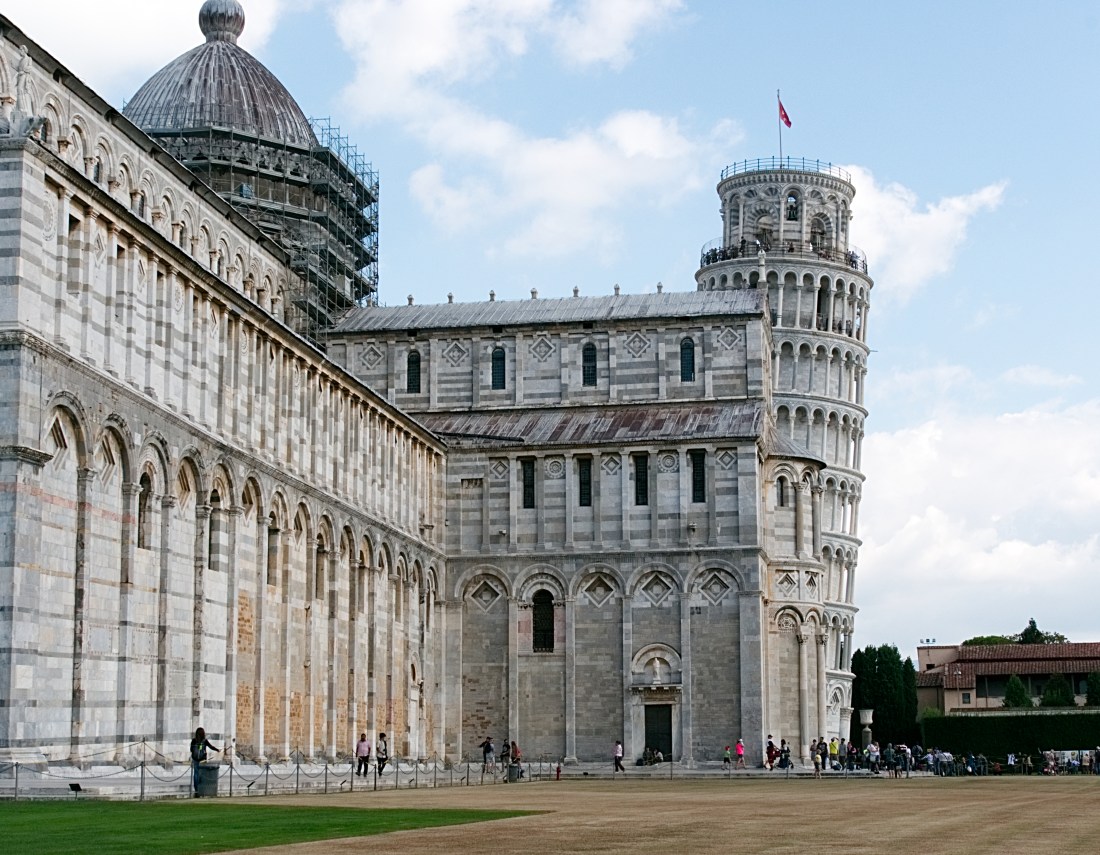
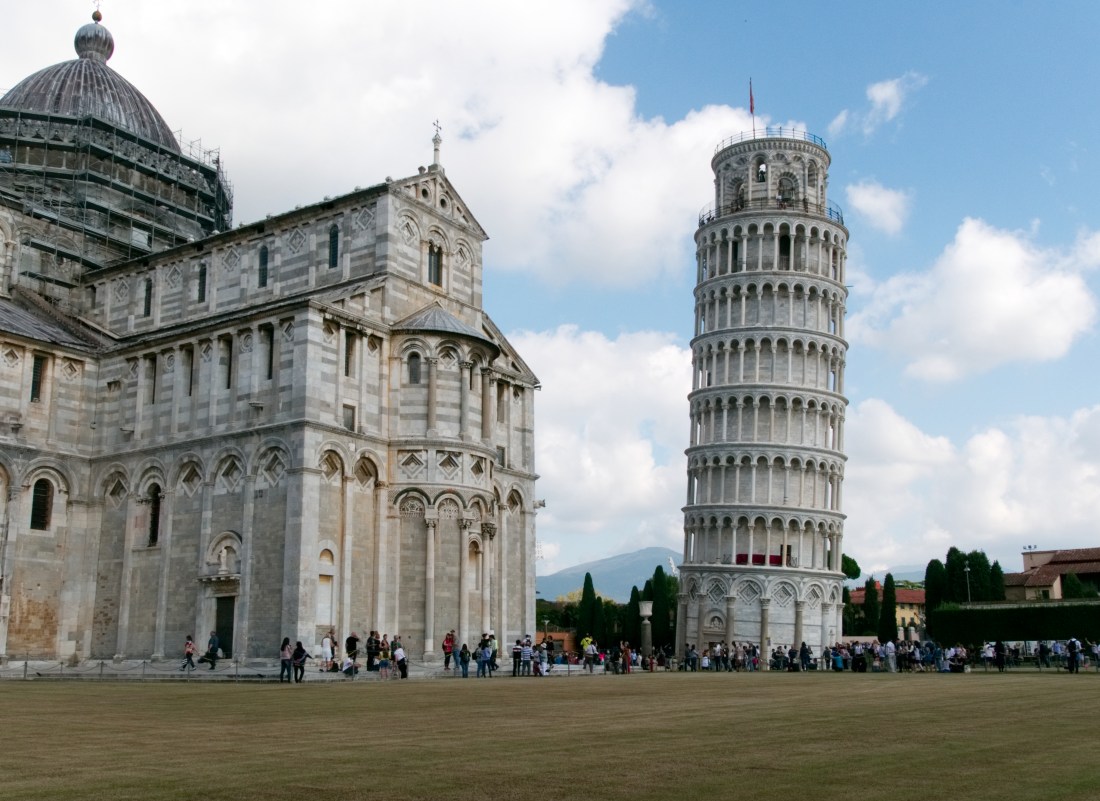
Drove to Pisa – maybe 35 mins on the toll road. Parked easily and just made it to the Duomo before it closed for a concert. They are doing a lot of work on it both inside and outside. Still very impressive, will be interesting to compare with Sienna.
The heart of the Piazza del Duomo is the Duomo, the medieval cathedral of the Archdiocese of Pisa, dedicated to Santa Maria Assunta (St. Mary of the Assumption). The cathedral has two aisles on either side of the nave. The transept consists of three aisles. The church is known also as the Primatial, the archbishop of Pisa being a Primate since 1092.
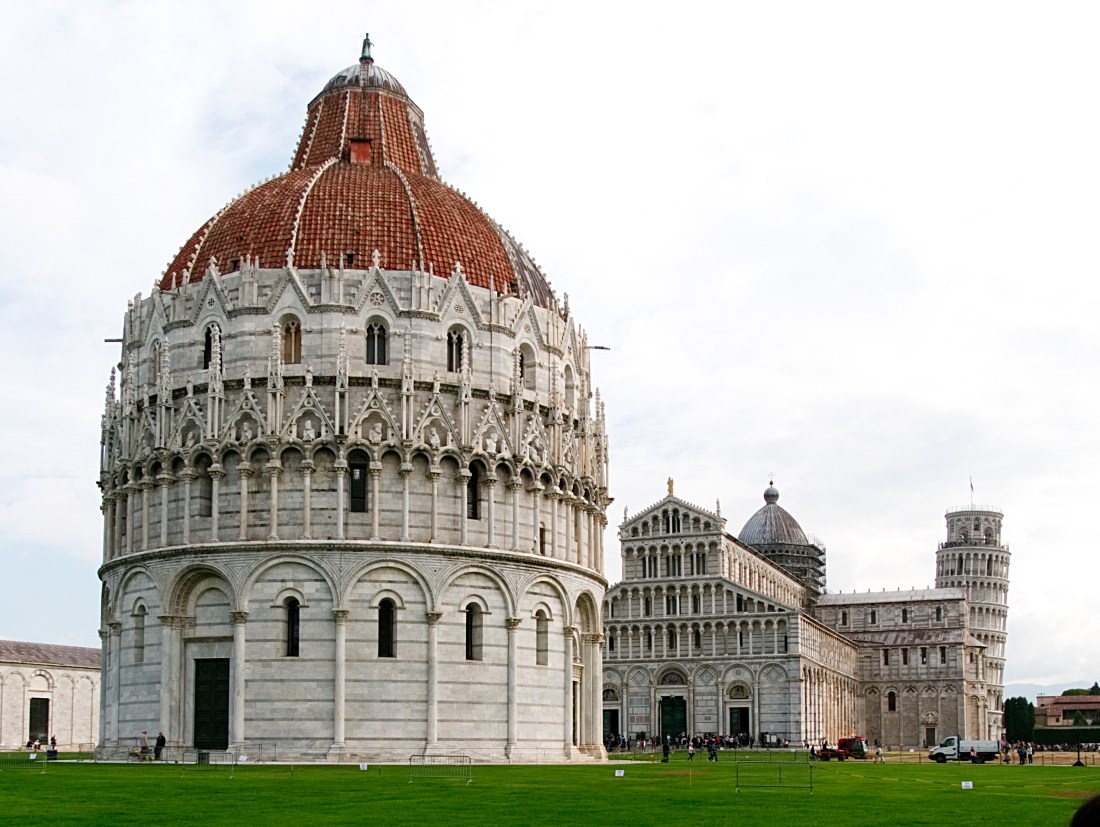
070 Pisa 0001
Its construction began in 1064 by the architect Buscheto. It set the model for the distinctive Pisan Romanesque style of architecture. The mosaics of the interior, as well as the pointed arches, show a strong Byzantine influence.
The façade, of grey marble and white stone set with discs of coloured marble, was built by a master named Rainaldo, as indicated by an inscription above the middle door: Rainaldus prudens operator.
The massive bronze main doors were made in the workshops of Giambologna, replacing the original doors destroyed in a fire in 1595. The original central door was of bronze, made around 1180 by Bonanno Pisano, while the other two were probably of wood. However, worshippers have never used the façade doors to enter, instead entering by way of the Porta di San Ranieri (St. Ranieri’s Door), in front of the Leaning Tower, built around 1180 by Bonanno Pisano.
We also visited the Baptistry: The Baptistery, dedicated to St. John the Baptist, stands opposite the west end of the Duomo. The round Romanesque building was begun in the mid 12th century: 1153 Mense August fundata fuit haec (“In the month of August 1153 was set up here…”). It was built in Romanesque style by an architect known as Diotisalvi (“God Save You”), who worked also in the church of the Holy Sepulchre in the city. His name is mentioned on a pillar inside, as Diotosalvi magister. the construction was not, however, finished until the 14th century, when the loggia, the top storey and the dome were added in Gothic style by Nicola Pisano and Giovanni Pisano.
It is the largest baptistery in Italy, with a circumference measuring 107.25 m. Taking into account the statue of St. John the Baptist (attributed to Turino di Sano) atop the dome, it is even a few centimetres taller than the Leaning Tower.
The portal, facing the façade of the cathedral, is flanked by two classical columns, while the inner jambs are executed in the Byzantine style. The lintel is divided into two tiers, the lower one depicting several episodes in the life of St. John the Baptist, and the upper one showing Christ between the Madonna and St. John the Baptist, flanked by angels and the evangelists.
The immensity of the interior is overwhelming, but it is surprisingly plain and lacking in decoration. It has notable acoustics also.
The octagonal baptismal font at the centre dates from 1246 and was made by Guido Bigarelli da Como. The bronze sculpture of St. John the Baptist at the centre of the font is a remarkable work by Italo Griselli.
The pulpit was sculpted between 1255-1260 by Nicola Pisano, father of Giovanni Pisano, the artist who produced the pulpit in the Duomo. The scenes on the pulpit, and especially the classical form of the naked Hercules, show at best Nicola Pisano’s abilities as the most important precursor of Italian renaissance sculpture by reinstating antique representations.[2] Therefore, surveys of the Italian Renaissance usually begin with the year 1260, the year that Nicola Pisano dated this pulpit.[3]
And the Camposanto: The Camposanto Monumentale (Monumental Cemetery), also known as Campo Santo or Camposanto Vecchio (Old Cemetery), is located at the northern edge of the square. This walled cemetery is said to have been built around a shipload of sacred soil from Calvary, brought back to Pisa from the Fourth Crusade by Ubaldo de’ Lanfranchi, the archbishop of Pisain the 12th century. This is where the name Campo Santo (Holy Field) originates.
The building itself dates from a century later and was erected over the earlier burial ground. The building of this huge, oblong Gothic cloisterbegan in 1278 by the architect Giovanni di Simone. He died in 1284 when Pisa suffered a defeat in a naval battle of Meloria against the Genoans. The cemetery was only completed in 1464. The outer wall is composed of 43 blind arches. There are two doorways. The one on the right is crowned by a gracious Gothic tabernacle and contains the Virgin Mary with Child surrounded by four saints. It is the work from the second half of the 14th century by a follower of Giovanni Pisano. Most of the tombs are under the arcades, although a few are on the central lawn. The inner court is surrounded by elaborate round arches with slender mullionsand plurilobed tracery.
070 Pisa 0056
The Camposanto Monumentale once contained a large collection of Roman sculptures and sarcophagi, but now there are only 84 remaining. The walls were once covered in frescoes, the first were applied in 1360, the last about three centuries later. The Stories of the Old Testament by Benozzo Gozzoli (c. 15th century) were situated in the north gallery, while the south arcade was famous for the Stories of the Genesis by Piero di Puccio (c. late 15th century). The most remarkable fresco is The Triumph of Death, a realistic work by Buonamico Buffalmacco. On 27 July 1944, incendiary bombs dropped by Allied aircraft set the roof of the building on fire and covered them in molten lead, all but destroying them. Since 1945, restoration works have been going on and now the Campo Santo has been brought back to its original state.
070 Pisa 0064

Vinci

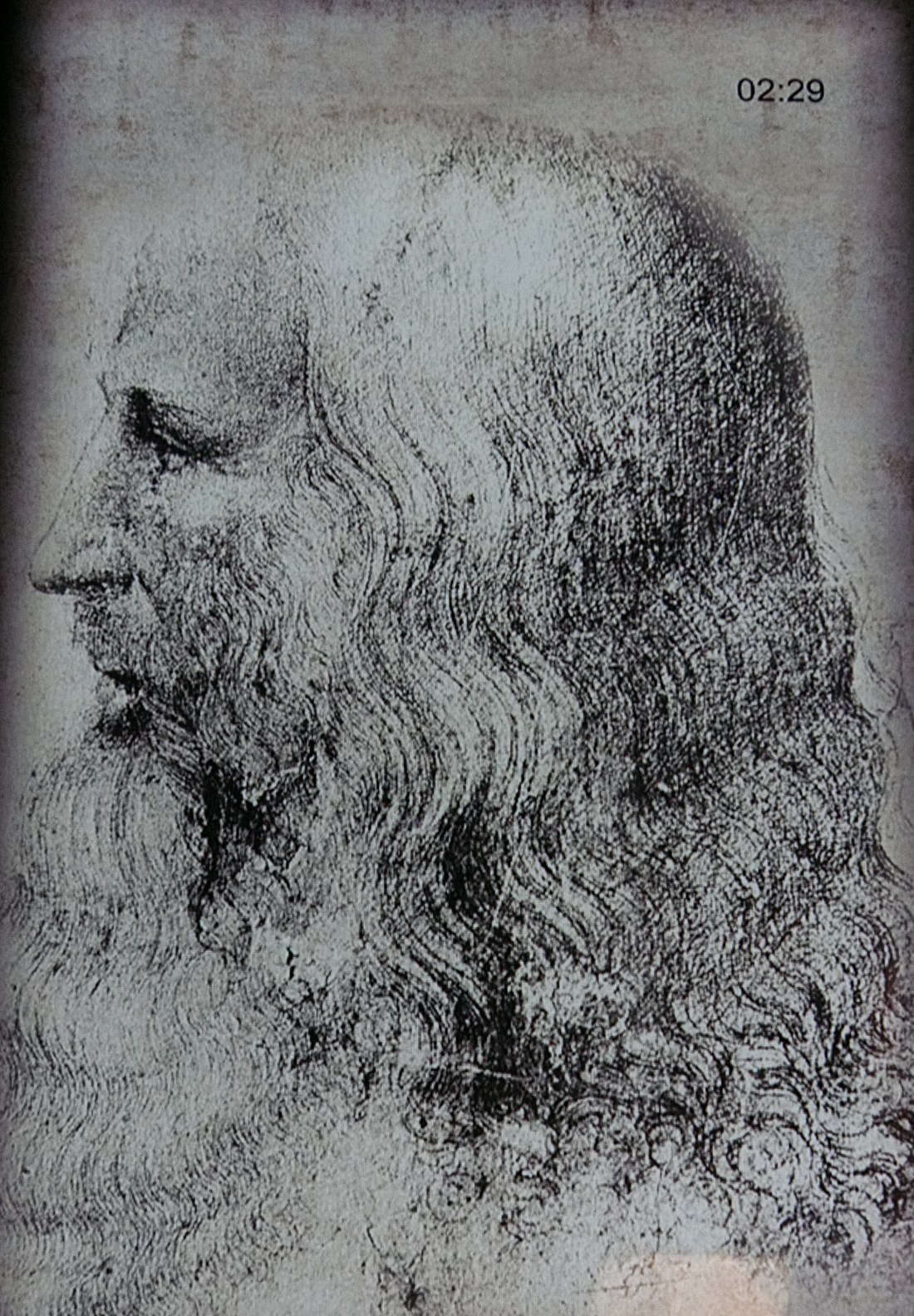
Drove to Vinci using the side roads and parked outside the town – wrong end as it turned out. The museum was in four parts. The first two parts were in the Castello at the top of the hill. Some good videos and many models of Da Vinci’s works. They included locks on rivers, flying machines, bicycles, tanks, cannons, and a construction device to load great stone pieces on the top of the Duomo at Florence.
Also there was a climb to a tower area . They were good at towers! This gave a great view back over the town and onto the countryside.
Then a 2 km or so drive to Da Vinci’s birthplace. There was a small museum there containing reproductions of his major works.
His birthplace was a little further – in the countryside amid olive groves. Great video inspiring one to read further about his life.
060 Vinci 0093
Vinci (Italian pronunciation: [ˈvintʃi]) is a town – officially a “city” (città)[1] – and comune of Metropolitan City of Florence in the Italianregion of Tuscany. The birthplace of Renaissance polymath Leonardo da Vinci lies just outside the town.
Easy drive back to Lucca on the freeway maybe 90 minutes.

Lucca

Toured Lucca
Villa Agnese B&B is fine. We have a nice room on the ground floor. It is located just outside the old town walls. We can walk in via a track leading to a secret entrance.

Spent the day walking Lucca.
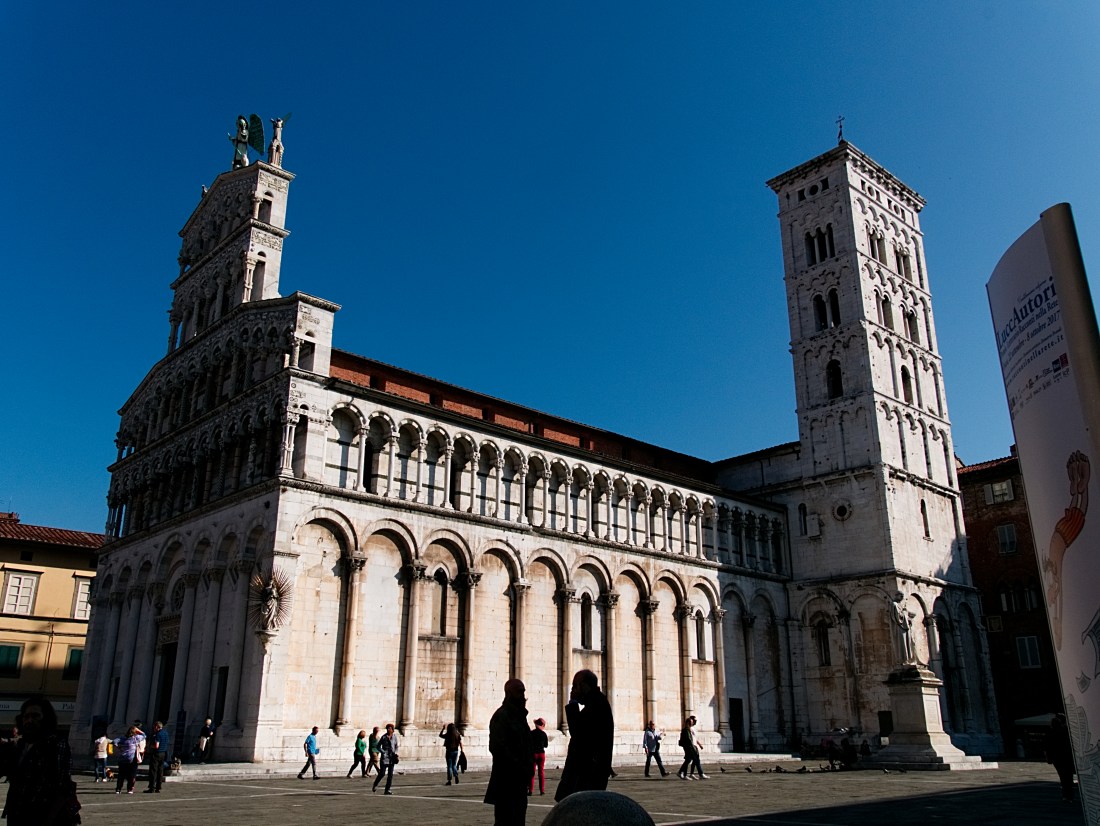
Duomo San Martino

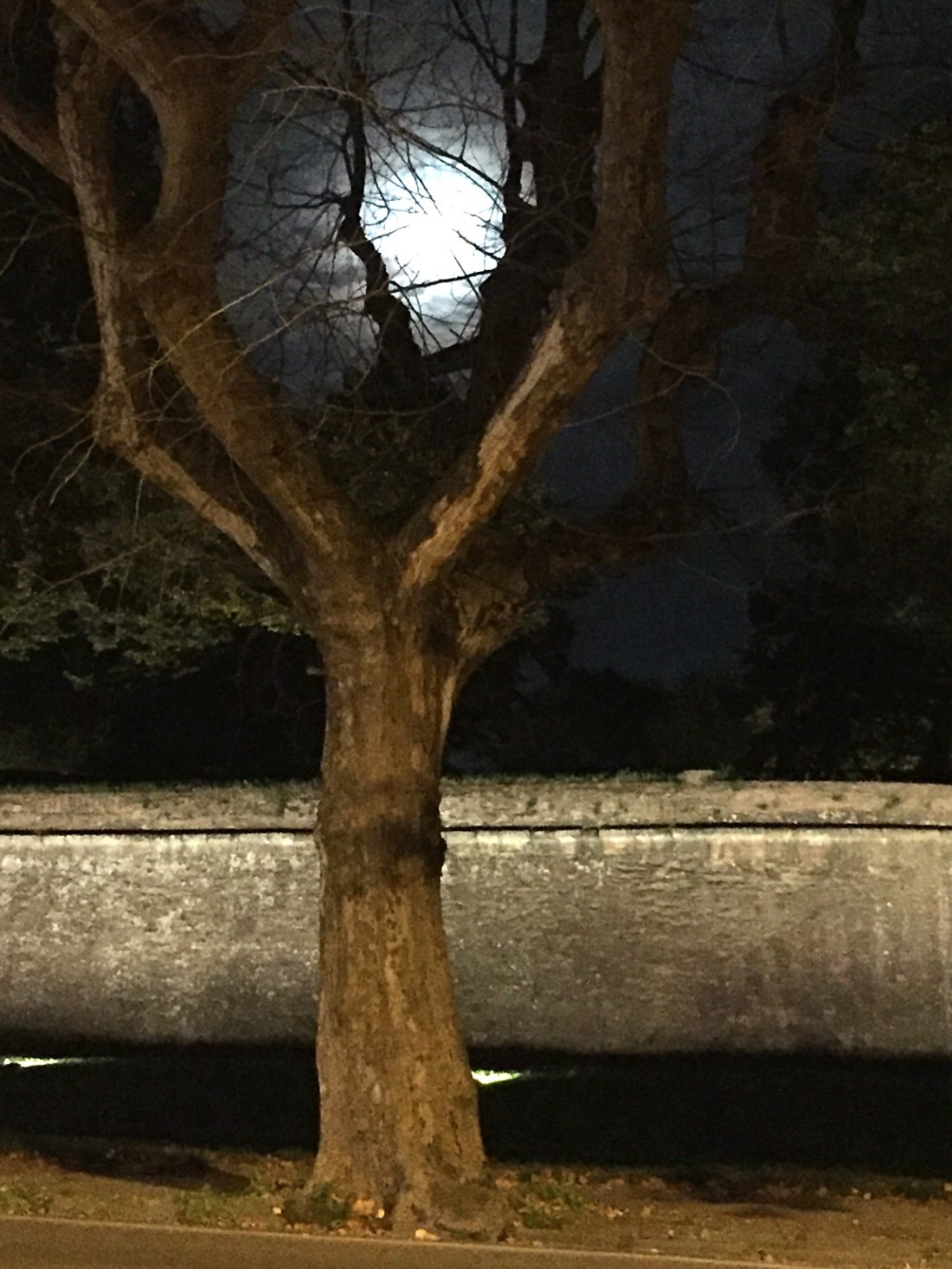
050 Luca 0018


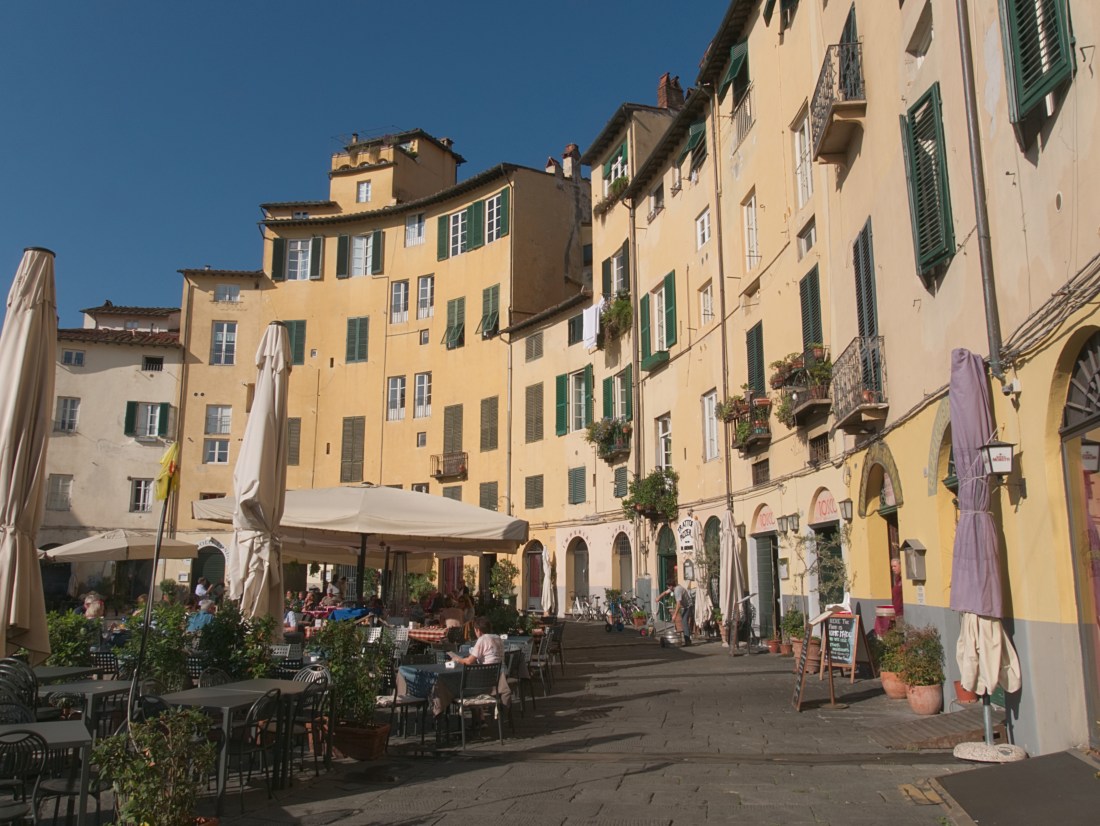
Piazza dell’ Anfiteatro is a great circular piazza surrounded at the edges by restaurants with a huge statue of a Roman face in the centre.


Casa di Puccini – a really interesting little museum on Puccini ‘s life and operas


Just wandering the old narrow streets looking at the shops.


Padova to Lucca

Accomodation: Villa Agnese
Mainly travel till 1pm via expressway- very busy as usual with speeding cars and lots of trucks. We stopped at huge over road restaurant for coffee which wasn’t bad.
It is quite a big walled town with ramparts and what would have been a moat which is now a grasses area. Very busy with tourists. We had our usual sandwich lunch and chatted to a very friendly, nice German couple who had a beautiful big dog – like a St Bernard but a guard dog. Took a look no walk down the main street- lots of leather shops and bought a wallet. Eventually made it to the other side where the tourist office was and got maps and walked back around town.
Weather was wet but we were well prepared. Headed back into Lucca at 6.30pm- through the ramparts which were wide and great and had a wine in. The beautiful amphitheater square – dating from Roman times.
050 Luca 0009
Went to restaurant called Punto recommended by the German couple- unusual and nice food e.g. Spaghetti with garlic, anchovy and bleach cabbage and rabbit with porchetta- extensive , rich desserts.
IMG_5727

Padova Day 2

Beautiful day and perfect for our exploration of this lovely town. Headed into the old town – absolutely wonderful and character filled.
Piazza della Frutta, Piazza dei signori- 2 lovely squares surrounded by arched colonnades and historic buildings- market stalls set up with fruit and vegetables for sale. Lots of cafes and tables and chairs . People don’t do take away but rather sit and socialize or stand at the bar for short espresso.
Baptistery – next to Duomo
Decorated by Giusto de Menabuoi- all around the walls and roof dome. Duomo had no stained glass but huge with numerous domed sections- impressive.
Cafe Pedrocchi – supposedly a meeting place from 1831 for intellectuals . It is beautiful out and in and is now very upmarket . We had the Pedrocchi cake and coffee- both extremely rich. The coffee was a hot shot of black with a cold crime de menthe cream layer on top. The cake was similar with chocolate cake and chocolate interspersed with crime de menthe
Prato Della Valle- walked to this fabulous open space – circular surrounded by a canal which was lined with statues. Crossed little bridges to get the central space which was grassed. Lots very place to relax and we had our Lunch of bread and cheese and prosciutto which we had bought- many people doing the same thing
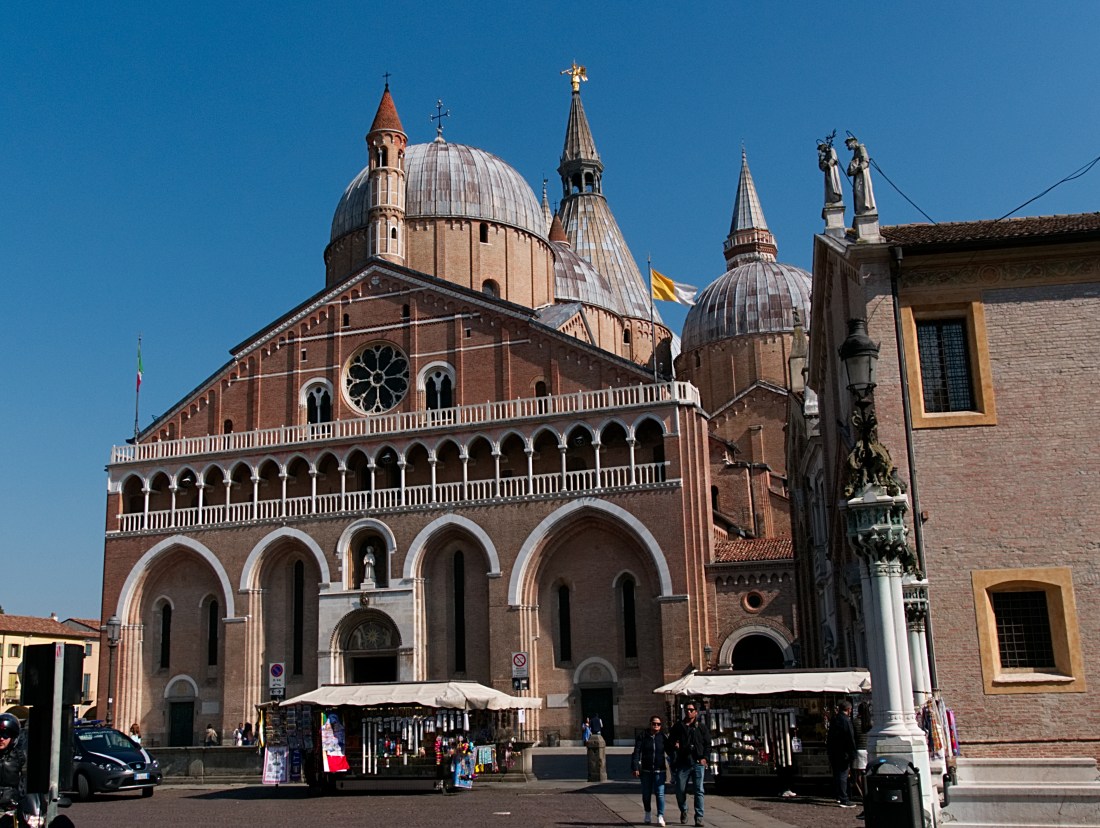
Basilica San Antonio
An impressive church housing the tomb of St Anthony which was very spectacular – huge space highly carved white marble with contrasting statues in black.
040 Padua 0055
Relaxed in piazza Della Frutta and Peter had a spritzer which is the popular local drink. Meal last night- found a very popular restaurant and had grilled scampi and mixed fried seafood – very good

Padova Day 1

Stayed at: Hotel Europa
17deg and showers
Our journey- easy exit from Vicenza – car park – only 35 euros for 3 days which was good. It only took 40 minutes to get to Padua, no trucks because it is a Sunday. We found hotel relatively easily and parked. More modern hotel but in an excellent location.
Scrovegni Chapel
Beautiful chapel built 1303 -1305 completely decorated by Giotto depicting all parts of Jesus’ life from his birth, to death and resurrection. Rich coloured and the rich blue of the ceiling with gold stars  is a standout . Scrovegni built the chapel because his father was a usurer and had made his money from it – in a way trying to buy his way to heaven! His father, the usurer was mentioned in Dante’s Inferno.
The museum next to the Scrovegni  had a huge collection of archaeological remains from the Padua area and Egyptian and much more including paintings by Tintoretto. Also a special collections of works by Lino Selvetina- excellent.
Observed a lot when viewing early religious works: Jesus is often portrayed as a curly haired redheaded baby and Mary has been given distinctively European features.

Vicenza Day 2

Villa la Rotunda – we thought it was a 30 minute walk but took at least 45 minutes – still a pleasant level walk.
The villa is probably Palladio’s most famous ones – completely symmetrical with central round decorated dome and the main rooms going off it. Fabulous fireplaces and frescoes (no photos allowed inside – they clearly wanted to market their internal postcard photos). Placed on hill with nice views around. It was built across the compass points to allow light into all rooms. It is now owned by the Valmarana family who also once owned the palazzo we are staying in. €20 entry was steep but worth it. We took a shorter route back and came back via the main square and the Basilica Palladiano. There was plenty of action with a wedding and many market type stalls seeming to represent different organisations.
Rabbit for dinner! Lots of rabbit and fish.. and beef and truffles

Vicenza Day 1

Getting to Vicenza: easy trip from South Tyrol to Vicenza by the motorway which was massed with trucks . However 3 lanes and speed limit of 130 km/hr meant fast driving requiring concentration. We found the suggested car park easy and walked with luggage to Palazzo where lady was waiting to show us into the apartment. Excellent location again.
Vicenza is synonymous with Palladio – the 16 century architect who built so many fabulous villas, public buildings and churches here. Best called a Roman style in a Renaissance way- very symmetrical with columns as the distinguishing feature.
Vicenza – old town is a pedestrian area so we could walk around and see and visit a number of Palladian buildings.
Highlights
• Teatro Olympica – fabulous roofed amphitheatre- with 3 d set  which was for a production of Oedipus Rex
• Palazzo Chiericati- which houses fabulous civic collection of paintings
• Basilica Palladiano- huge with green domed roof in main piazza
• Palazzo Barbarano da Porto which is also the Palladio museum ???? Great models of his buildings
• And of course palazzo Valmarana where we are staying in studio apartment – old style
By about 7pm each evening the centre of Vicenza begins to get really busy. Everyone comes out to shop and eat. All really well dressed!
Restaurant Il Molo was busy and trendy with generally younger people. The food was great – an interesting dish of cold mackerel on bed of pumpkin mash with sweet taste as well but on a hot plate. Second main was a plate of pasta Norma – eggplant and tomato – delicious and huge. The tiramisu was the best ever. 

What was amazing was the couple next to us ate 4 courses including ink pasta – how they managed it we don’t know!